Frontier markets delivered a strong second quarter, with most markets recovering from their March lows despite a volatile macroeconomic and geopolitical backdrop. Supported by improving investor sentiment and still compelling valuations, the MSCI Frontier Markets Index returned 11.2% in USD terms during the quarter. East Capital Global Frontier Markets returned 11.2%, in line with the benchmark. The fund outperformed on a year-to-date basis, returning 14.0% compared with 10.7% for the index.
Vietnam, our largest country exposure, remained characterised by cautious sentiment towards exporters and consumer-related businesses amid concerns over external demand. Meanwhile, domestic retail investors continued to concentrate on a narrow group of momentum-driven large-cap stocks, particularly within the Vingroup ecosystem. We believe that this environment created attractive opportunities elsewhere in the market, enabling us to selectively increase our exposure to companies with improving fundamentals and undemanding valuations, rather than chasing short-term market leadership.
Accordingly, we initiated positions in two new holdings. The first was Gemadept, a port operator that should benefit from the continued ramp-up of Gemalink and the expansion of the Nam Dinh Vu terminal. Despite these positive operational developments, the share price was broadly unchanged during the quarter, trading at approximately 15.7x 2026e earnings and supported by expected mid-teen revenue and even faster earnings growth. We also added FPT Retail, where the rapidly expanding pharmacy business and the turnaround of its previously loss-making ICT retail operations are driving meaningful profitability improvements. Following a significant de-rating earlier this year, the company trades at 19.4x and 14.7x estimated earnings for 2026 and 2027 respectively, with an average expected earnings growth of 35% for 2026 and 2027. We believe that both companies offer attractive exposure to Vietnam's long-term domestic consumption and trade-related growth at valuations that do not fully reflect their medium-term earnings potential.
Africa remained one of the strongest contributors to portfolio performance and continues to offer a compelling mix of improving macroeconomic fundamentals, attractive valuations and increasing investor interest. In Nigeria, Guaranty Trust Bank and Zenith Bank were among the largest contributors to relative performance, rising 19% and 23% respectively following their exceptional first-quarter gains. Despite this performance, both banks continue to trade at highly attractive valuation levels of just 3-5x 2026e earnings and 0.8-1.2x book value, while generating returns on equity of around 27-29% and dividend yields approaching 11%.
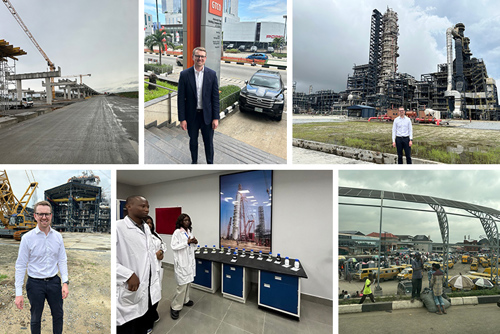
Our recent research trip to Lagos further reinforced our constructive long-term outlook on Nigeria. Meetings with companies from various sectors and a site visit to the Dangote Refinery highlighted that, although the country's structural challenges remain considerable, reforms are increasingly translating into tangible improvements on the ground. Inflation has begun to moderate from elevated levels, oil production is gradually recovering, and the commissioning of the Dangote Refinery represents an important step towards reducing Nigeria's dependence on imported fuel. While the operating environment remains challenging, particularly for consumers and smaller businesses, the overall policy direction appears more constructive than it has been in recent years.
As the value of Nigerian bank holdings appreciated significantly, we diversified our exposure beyond financials by initiating a position in MTN Nigeria. The company offers attractive opportunities to benefit from the country's structural growth in telecommunications and mobile money and is currently trading at a reasonable estimated P/E of 10.3x and 7.7x for 2026 and 2027 respectively, alongside a dividend yield of 7.7%. We also increased our holding in Jumia following recent share price weakness. Operational improvements continue to gain traction, with gross merchandise value (GMV) growing around 30%, while improving macroeconomic conditions across Africa should provide an increasingly supportive backdrop for this long-term turnaround story.
The Middle East and Central Asia remained in focus during the quarter, with tensions surrounding Iran and the Strait of Hormuz temporarily affecting regional investor sentiment and energy markets. Despite the heightened geopolitical uncertainty, the underlying economic fundamentals across the Gulf remained resilient. We therefore took advantage of periods of market weakness to selectively increase our exposure to high-quality businesses with recurring cash flows, strong competitive positions and attractive dividend profiles.
In the UAE, we initiated a small position in Spinneys, a well-managed consumer platform trading at 13.6x 2026e earnings while offering a dividend yield 5.3%, as well as an exceptionally high return on invested capital of 25%. We also modestly increased our investment in Tecom, whose portfolio of commercial real estate assets in Dubai generates resilient, recurring cash flows while providing attractive exposure to continued economic development and landbank optionality. At roughly 11x 2026e earnings and a dividend yield of 5.4%, we continue to view the valuation as compelling.
Elsewhere in Africa, Abu Dhabi Islamic Bank Egypt delivered another strong quarter, rising 41% in USD terms, while still trading at just 4.4x 2026e earnings and generating an expected return on equity of nearly 30% both this and next year. In Kenya, Safaricom advanced by 24%, supported by an attractive valuation of 12.0x 2026e earnings and a dividend yield of 7.2%. Although revenue growth remains in the low teens, earnings growth continues to significantly outpace revenue growth as losses from the Ethiopian business gradually moderate and operational leverage improves.
On the negative side, Kazakhstan detracted from relative performance as both the uranium producer Kazatomprom and the gold miner AltynGold declined by around 10% and 20%, respectively. This was due to softer commodity prices and investors taking profits following a strong period of performance. During this period of weakness, we modestly increased our position in Kazatomprom, reflecting our continued confidence in the long-term uranium investment case. The company continues to trade at 13.3x 2026e earnings while offering a dividend yield of 4.6%.
Looking ahead, we continue to believe that frontier markets offer one of the most compelling combinations of structural earnings growth, improving macroeconomic fundamentals and deeply discounted valuations among global equities. While uncertainty surrounding global trade and monetary policy is likely to persist, many frontier economies are increasingly being driven by domestic demand, reform momentum and favourable demographic trends rather than external cycles. More broadly, we continue to observe a gradually improving backdrop across many of our markets, characterised by easing inflation, improving policy credibility and recovering investor confidence.
Despite another strong period of absolute performance, the portfolio continues to trade at just 6.6x 12-month forward-looking earnings, while we expect around 15% earnings growth, on average, over this year and next. We believe this combination of downside protection through valuation and meaningful long-term upside through sustained earnings growth is unusually attractive. Historically, periods of elevated volatility have historically created attractive opportunities across our investment universe, and we remain focused on building positions in businesses with strong market positions, high returns on equity and long-term compounding potential. We believe this disciplined approach remains well suited to an environment where patient active management and local knowledge continue to create attractive investment opportunities.
Performance in USD net of fees.
The information in this document should not be considered investment advice and should not be used as the sole basis for an investment decision. Please read the Prospectus and the KID, which are available on the fund page. This publication is not directed at you if we are prohibited by any law in any jurisdiction from making this information available to you and is not intended for any use that would be contrary to local laws or regulations. Every effort has been made to ensure the accuracy of the information, but it may be based on unaudited or unverified figures or sources.