Q1 2026 was very much a quarter of two halves for emerging and frontier markets. Overall, emerging markets finished flat, while frontier markets were down 1%. Both outperformed the S&P 500 which returned -4%. Despite the volatility, we were pleased to end the period with positive alpha in both our global emerging markets and frontier markets strategies.
Figure 1. Q1 2026 and March total return in USD (%)

We saw classic bull market conditions in January and February, with emerging markets up 15% as investors continued to rotate out of the US amid concerns over a weaker USD, as well as stretched valuations and positioning in the Magnificent Seven. In Asia, rising chip prices highlighted the dominant competitive position of chip makers, driving huge earnings revisions and inflows into Taiwan and South Korea. Retail investors amplified these moves, particularly in Korea.
However, this momentum was disrupted by the conflict in the Middle East. Initially, investors unwound their most profitable trades, including those in Korea. As the conflict persisted, the focus shifted towards the risk of higher-for-longer commodity prices, with the price of oil up 75% in March alone. This raised concerns about higher inflation, interest rates and weaker global growth, something that can clearly be seen in the significant shift in the Fed’s rate expectations (Figure 2).
Figure 2. FED Futures Curve

Clearly, such spikes in oil and gas prices do not bode well for emerging markets, most of which are major importers of commodities. Many governments have introduced temporary measures, such as cutting fuel taxes (as in Korea) and freezing electricity prices (as in Taiwan). However, these measures are only short term and it is difficult to meaningfully cushion economies over the long term. As such, the key hope is that the conflict in the Middle East will end and the Strait of Hormuz will reopen as soon as possible, at least for major buyers such as China and India.
Amid the March turmoil, we remained disciplined. Across our strategies, we immediately reviewed each holding to assess whether its underlying value had changed. To date, we believe that there were only a handful of companies where this was the case, primarily in the Middle East. Consequently, we exited several positions in the region, such as a UAE real estate company and a bank. Somewhat surprisingly, we sold the bank with a positive return year to date, and the real estate company with a positive return over the last six months. Both companies are still trading comfortably below our sell price. In our Global Emerging Markets Fund we also added a bank in Saudi Arabia, as the country is a beneficiary of the higher oil prices and the valuation had come down following the outbreak of the conflict.
Once again, frontier markets proved to be an uncorrelated source of returns, both within the asset class and relative to emerging and developed markets. While the benchmark declined by around 1%, our Global Frontier Markets Fund delivered positive returns. This resilience was driven partly by stock selection and partly by the fact that frontier markets, and our fund in particular, offer a highly diversified set of companies across regions, sectors and macroeconomic exposures.
With an exposure of almost 15%, Kazakhstan is the second-largest country in our Global Frontier Markets fund and a clear beneficiary of higher oil prices. One of the most interesting companies in Kazakhstan is Kazatomprom, which is not only the world’s largest uranium producer, but also by far the lowest-cost producer. Its stock returned 44% as energy prices rose and interest in nuclear power picked up again. Having recently met with the Chief Executive Officer and the Chairman of the Board, it is clear that the company is ramping up its efforts to raise market awareness of both the uranium / nuclear story and the company itself, which is currently trading at a significant discount to its US-listed peer, Cameco. We increased our exposure during the quarter to reflect the improved outlook for uranium.
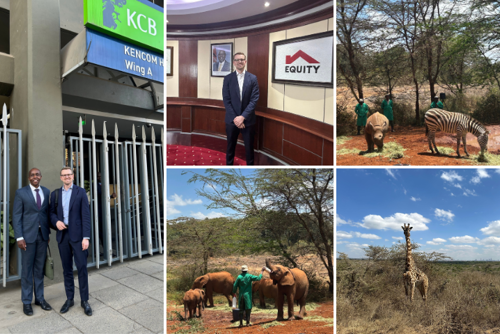
As usual, the first quarter was a busy period for travel. The team was on the ground in Egypt, Vietnam and Sri Lanka, and a full team meeting was held in Shanghai for a week of detailed portfolio discussions, alongside company and broker meetings. Prior to the escalation, the overall environment in frontier markets was positive, characterised by strong growth, contained inflation and constructive corporate sentiment. While consumer sentiment in China remains subdued, the high-tech export sector is booming, as reflected in the 22% year on year increase in export date for January-February. This remains a key investment theme for us.

Clearly, going forward, a lot will depend on the outcome of the extremely difficult to predict Middle Eastern conflict. If Trump can extricate the US from the conflict smoothly and Iran opens the Strait of Hormuz to most countries, we would expect the positive sentiment seen in January and February to continue, provided that commodity prices normalise. However, until this happens, we expect the market to continue trading based on headlines coming out of the US and Trump’s Truth Social account.
It is worth noting that the broader narrative for emerging markets remains intact. Capital expenditure on AI data centres and second quarter 2026 chip orders continue to exceed expectations, which should drive strong earnings growth in two of the three largest markets, Taiwan and South Korea. The third largest market, China, appears relatively insulated from the commodity price shock. This is supported by extremely low inflation and a lower reliance on imported fossil fuels compared with other Asian countries, while export data remains exceptionally strong.
Frontier markets also remain resilient and are well diversified across geographies, sectors and macroeconomic exposures, including a balance between oil exporters and importers. As such, we believe the portfolio is well positioned to withstand a range of scenarios.
On-the-ground during Q1 2026

Performance in USD net of fees.
This is marketing communication. This publication is not directed at you if we are prohibited by any law in any jurisdiction from making this information available to you and is not intended for any use that would be contrary to local laws or regulations. Every effort has been made to ensure the accuracy of the information, but it may be based on unaudited or unverified figures or sources. The information in this document should not be considered investment advice and should not be used as the sole basis for an investment decision. Please read the Prospectus and the KID, which are available on the fund pages at www.eastcapital.com