Q2 was another strong period for emerging and frontier markets, with returns of 24% and 11% respectively. In emerging markets, performance was driven by Korea and Taiwan, both of which overtook China to become the two largest markets in the MSCI Emerging Markets Index (see Figure 1), marking something of a new era for emerging markets.
Figure 1. Country weights in MSCI Emerging Markets

Indeed, by the end of June, the two markets together accounted for just over 50% of the benchmark. This would have been difficult to imagine at the start of the year, and this reinforces our global emerging market fund’s approach of maintaining a country-neutral stance. We do not believe that making macro predictions on which countries will perform best is a reliable way to generate alpha. Instead, we focus on constructing portfolios within each major market that are aligned with the benchmark’s country weights.
Figure 2 provides a deeper view of performance. The main driver of returns has been the significant upward revision in earnings expectations in Korea and Taiwan. Markets are increasingly reflecting successive price increases in the underlying hardware supporting the build-out of AI data centres, particularly memory chips, which we have written about in detail in this article. Consequently, despite a year to date return of 119%, South Korea has become cheaper, as have emerging markets as a whole, with India and China having derated.
Figure 2. Total equity market return YTD

An interesting observation in Korea is that foreigners have been net sellers, trimming around USD 75 billion of equities year to date as of early June. In contrast, retail investors have been pouring in money, particularly through leveraged ETFs. Even in Hong Kong, the fastest growing ETF of all time is a double-leveraged Hynix ETF, which now represents 13% of the Hong Kong ETF market. This is clearly not ideal, as the Korean regulator belatedly acknowledged. As such, we expect volatility to remain high and have therefore reduced our positions in these stocks. However, we remain slightly overweight as we believe that the earnings upgrades will continue as the memory tightness persists into 2027 and valuations remain reasonable. Hynix and Samsung together will generate almost USD 1 trillion of free cash flow over the next three years, with a current combined market cap of around USD 2.6 trillion, a stark contrast to the US hyperscalers, where free cash flow is falling steeply as they invest in data centres.
Looking ahead, our thesis on AI is that we have reached the bottom of a steep S-curve in terms of token consumption, as agentic AI accelerates throughout enterprises worldwide. We are experiencing this first hand, as we regularly max out our Claude tokens when using multi-chained agents rather than simple queries. This will mean that the AI build-out will have to continue and the hyperscalers will have no option but to invest heavily in data centres to meet this insatiable demand for tokens. According to some sources, approximately 30% of their capex will go on memory in 2026, compared to just 8% in 2024, with more flowing to Taiwan for chip production and components. This will lead to continually rising prices. One industry expert sees memory prices rising by 40-50% quarter on quarter in 3Q 2026, whereas market consensus is closer to 15-20%. Capacity will remain constrained for memory and most other components well into 2028.
Alpha in the emerging market fund was 13% in 2Q 2026 and 13.5% in 1H 2026. This was largely driven by strong stock picks in Taiwan and Korea, both the large Korean memory names and also smaller companies operating in key bottlenecks in the AI value chain. Five new companies were added to the fund this year, with the largest contributor being Samsung Electro-Mechanics (SEMCO). This component manufacturer returned 646% to the fund in 1H 2026. Towards the end of the quarter, we took profits in this name as we felt that the valuations looked quite stretched, even when taking into account our fairly bullish earnings expectations. At its peak, SEMCO represented just over 4% of the portfolio, but it currently accounts for only around 0.6%.
Aside from SEMCO, risk management drove the main trades. We took profit in positions that exceeded our active weight limit of 4%, while also actively managing factor exposures. For example, we began the year with an overweight position of 4-5% in Korean memory names, Samsung Electronics and SK Hynix, which we subsequently reduced to around 1%.
Amid the AI hype, we dug deeper into alternative opportunities in Korea that had been overlooked; K-Beauty is one area that caught our attention. We travelled to Korea to meet with a range of companies in the sector. We initiated positions in names such as APR, which delivered 174% year-on-year growth in Q1, supported by strong sales growth in both Europe and the US. We also added Coway, a water purification company with a proven track record of growth, which is currently trading at single-digit P/E multiples.
Given the lack of AI exposure, frontier markets had a quieter period, though still performing solidly, with the index returning 11% in USD terms during the quarter and year-to-date. Alpha generation was solid, at 3.3% for 1H 2026. One of the biggest drivers was African countries. In Nigeria, Guaranty Trust Bank and Zenith Bank were among the largest contributors to relative performance, rising 19% and 23% respectively following their exceptional first-quarter gains. Despite this performance, both banks continue to trade at highly attractive valuation levels of just 3-5x 2026e earnings and 0.8-1.2x book value, while generating returns on equity of around 27-29% and dividend yields approaching 11%.
On-the-ground during Q2 2026

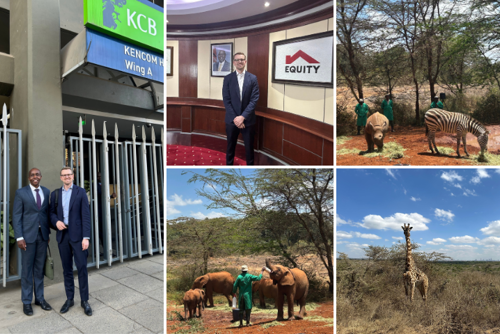
As usual, it was a busy quarter for travel, with the team on-the-ground in Nigeria, Brazil, multiple trips to Korea, the Czech Republic, Greece as well as many meetings in our home countries of India and China. Our trip to Lagos further reinforced our positive long-term outlook on Nigeria. Meetings with companies from various sectors, as well as a visit to the Dangote Refinery, highlighted that although the country’s structural challenges remain considerable, reforms are increasingly translating into tangible improvements. In Brazil, the environment was more cautious, with the rate cycle and October presidential elections dominating conversations. Nevertheless, we found many high-quality companies that had sold off strongly despite strong fundamentals.
Looking ahead, we believe that the backdrop for emerging markets remains constructive. Micron’s results and guidance, published just before the quarter end, indicate that the market continues to underestimate the substantial pricing power of component and semiconductor manufacturers. At the same time, we remain disciplined in our positioning and are not taking material risks relative to the benchmark, either at the sector or country level.
Valuations are even more attractive than at the start of the year, particularly in markets such as India and China. Although the top-down narrative in these countries is less compelling than in Korea and Taiwan, there are numerous individual investment opportunities where valuations have corrected despite strong fundamentals. A similar dynamic is evident in Brazil, where we recently visited and found that local investor sentiment appears overly pessimistic. Valuations remain attractive for the high-quality compounders that we believe can grow regardless of the political backdrop.
Another important factor that we believe is being overlooked is the current level of oil prices, which are below pre-war levels. The International Energy Agency forecasts a surplus of 5 million barrels per day by 2027, which could place further downward pressure on prices. This would support most of our markets, particularly India and the ASEAN region. Indeed, having spent the last few weeks meeting Indian CEOs in London, we have concluded that the fundamental situation on the ground in India is not nearly as bad as the common market narrative and weak market performance would suggest.
We continue to believe that frontier markets offer one of the most compelling combinations of structural earnings growth, improving macroeconomic fundamentals and deeply discounted valuations among global equities. While uncertainty surrounding global trade and monetary policy is likely to persist, many frontier economies are increasingly being driven by domestic demand, reform momentum and favourable demographic trends rather than external cycles. More broadly, we continue to observe an improving backdrop across many of our markets, characterised by easing inflation, improving policy credibility and recovering investor confidence. As such, we believe that our frontier market fund remains attractive at just 6.6x 12-month forward-looking earnings, while we expect average earnings growth of around 15% over this year and next.
Q2 2026 and H1 2026 total return in USD (%)

Performance in USD net of fees.
This is marketing communication. This publication is not directed at you if we are prohibited by any law in any jurisdiction from making this information available to you and is not intended for any use that would be contrary to local laws or regulations. Every effort has been made to ensure the accuracy of the information, but it may be based on unaudited or unverified figures or sources. The information in this document should not be considered investment advice and should not be used as the sole basis for an investment decision. Please read the Prospectus and the KID, which are available on the fund pages at www.eastcapital.com