This report sets out the Principal Adverse Impact (“PAI”) indicators according to the EU’s Sustainable Finance Disclosure Regulation (“SFDR”) for East Capital Global Emerging Markets Sustainable. It then highlights the key metrics the portfolio management team uses to assess the impact of the fund’s investee companies on the surrounding world.
Principal adverse impact indicators

Our fund’s GHG intensity is 72% below the benchmark. We do not invest in fossil fuel companies and would typically not invest in companies with a GHG intensity considerably higher than their peers.
Our fund‘s exposure to negative biodiversity impact / hazardous waste is nil / very low, we would not invest in high-risk companies as we avoid misalignment with SDG. We are TNFD early adopters and actively engage with portfolio holdings within Nature Action 100 initiative.
Due to lack of data on gender pay gap (only 1% coverage) in our universe, we focus on board gender diversity. Our portfolio previously lagged the benchmark, but we are now above it as the proportion of female board members has increased materially to 23% from 14% in H1 2023. It remains a topic on which we often engage with our holdings. For example, in H1 we voted against board nominations at seven meetings across six companies where board gender diversity was deemed insufficient.
As a Deforestation Investor Group member (aka DIG, previously called Financial Sector Deforestation Action), we map deforestation risks in our portfolio and engage with high-risk companies on deforestation issues.
Carbon intensity versus benchmark

While the data in the table on the first page is largely sourced from an external provider, we also calculate fund carbon intensity ourselves based on reported Scope 1 and 2 emissions in our internal database (i.e. we include emissions of companies that may not be picked up by data providers).
Data coverage has been increasing dramatically in the last few years to the point where there are just a handful of companies (<4%) that haven’t yet reported emissions, largely because they have recently listed and hence have not got their reporting systems in place. This increase in coverage is in part due to regulation (particularly in India), though also engagement efforts from investors like ourselves.
Case study: Sustainability themes driving alpha
Cenergy Holdings is a Greek industrial group operating through two subsidiaries: Hellenic Cables, one of Europe’s largest cable manufacturers and Corinth Pipeworks, a steel pipe producer. Cables are the larger engine, contributing roughly 70% of FY2025 revenue and EBITDA. The company controls approximately 60% of the inter-array cable market (the cables that connect individual turbines within an offshore wind farm to its substation), alongside a wide portfolio of export, onshore transmission and interconnection cables.
Positioning
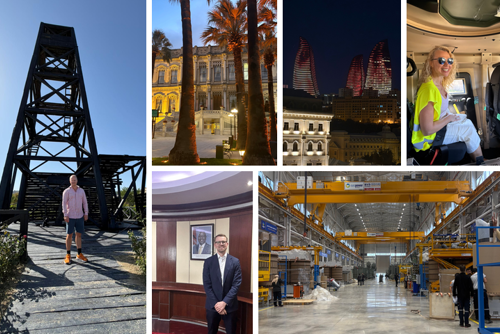
We first met Cenergy Holdings on a research trip to Athens in 2022 and have followed the company closely ever since. It has been a core holding of the fund since 2024 and we added to the position at the start of this year as we felt the market was not pricing in the strong growth on offer.
Structural tailwinds: electrification and grid reinforcement
The investment case has been reinforced by the pace of grid expansion across Europe. Total order backlog reached a record of EUR 3.9 billion at the end of H1 2026, close to double the EUR 2.0 billion the group carried at the end of 2022, when we first met the company. Recent awards span offshore wind and interconnection across several markets, including Ocean Winds’ BC-Wind project in Poland, East Anglia TWO and the Baltyk and Baltica offshore wind farms.
The past two months have produced the largest awards in the company’s history. In August 2026, Hellenic Cables won a turnkey EPCI contract from Greek transmission operator IPTO for the 320kV Corinth–Kos HVDC interconnection: approximately EUR 1.5 billion, around 1,290km of cable and 1 GW of capacity, running from Q4 2026 to 2030.
This followed the June 2026 award of Lot A of IPTO’s framework agreement, worth approximately EUR 1.15 billion, covering four further Greek island interconnections and roughly 920km of cable. Together that is some EUR 2.65 billion secured within six weeks, and both replace island diesel generation with mainland grid supply.
Alpha generation
The stock returned 48% in EUR in H1 2026, adding 28bps of alpha as the market digested the new contract wins and growing backlog. Since our first purchase in October 2024, the stock is up 2.4x.

SDG impact
We assess SDG impact using a proprietary tool, which is explained in detail in a PRI case study and featured as a best practice responsible investment example for China.
East Capital SDG VCA (value chain analysis) looks across the value chain of each company to identify the two most material SDGs for a company’s value chain. The tool gives a score of -100 to 100, based on current impact and a 3-5 year outlook. Impact is assessed based on materiality, intentionality, additionality and criticality.
We currently assess that 42% of the fund has a strong positive impact on one or more SDGs. Because we require a score of above 25 (“weak positive impact”) to be included in the portfolio, 100% of our companies have a positive impact on one SDG.

Case studies
SDG 2: Zero Hunger
BBB Foods operates Tiendas 3B, Mexico’s leading hard-discount grocery chain, extending affordable access to daily staples for budget-constrained households. As of 30 June 2026, the network had grown to 3,624 stores, up 593 over twelve months, while samestore sales rose 20.0% year-on-year. Hard discount still accounts for only around 3% of Mexico’s grocery market, against 23.6% in Germany and 33.6% in Poland, indicating substantial headroom to widen affordable food access for the roughly 80% of Mexican households in the low-to-middle-income bracket.
SDG 3: Good Health and Well-being
Benefit Systems is Poland’s leading provider of employee wellbeing benefits, using its MultiSport card to convert workplace benefits into measurable physical activity. Active sports cards reached 2.7 million in Q2 2026, up from 2.376 million in Q3 2025, with MultiSport Plus offering unlimited access to 6,000+ sports and leisure facilities across 55+ disciplines. The first Polish listed company to achieve B Corp certification.
SDG 7: Affordable and Clean Energy
Sungrow Power Supply is the world’s largest supplier of solar inverters and energy-storage systems by cumulative shipments, with over 1,000 GW of power electronic converters now installed worldwide. Storage overtook inverters as its largest business in 2025: energy storage revenue rose 49% to RMB 37.3 billion (42% of the group total) on shipments of 43 GWh. The company is targeting over 60 GWh in 2026 alone. Overseas sales currently account for 60.5% of revenue.
SDG 11: Sustainable Cities and Communities
WeRide is a global leader in Level 4 autonomous driving, operating Robotaxi, Robobus and Robovan fleets across more than 30 cities in 10 countries with over 2,200 days of public operation and a reported zero active-safety-incident record. In May 2025, it launched China’s first fully 24/7 Robotaxi network in a Tier-1 city, in Guangzhou. Its partnership with Uber commits to expansion into 15 additional cities over five years, including European markets, with autonomous-driving permits now held across eight countries.
Stewardship
During H1 2026, we voted at 59 meetings (86%) of the 65 shareholder meetings where we were able to vote; in 18 meetings (31%), we voted against some items.
We voted against items that are not aligned with our voting policy, part of our ESG policy, such as insufficient gender diversity at board level or overly long auditor tenure.
Voting is an important part of our active ownership efforts, and we typically follow up with management when we vote against items to ensure they understand the rationale for our actions.
Sustainable Investment Definition
ESG analysis at East Capital is done by the Portfolio Managers and Analysts who cover the companies using robust proprietary tools, such as East Capital ESG scorecard and East Capital SDG VCA, and reviewed by the ESG team.
We classify “sustainable investment" using 3 binding elements that leverage the results of these proprietary tools. These elements are outlined below.
As of 30 June 2026, we assess that 97.5% of the fund was classified as sustainable.
We had 2.5% of cash, which we maintain for liquidity reasons.
Sector based and norms-based screening
I. Companies with >5% of their revenues from fossil fuels, weapons, tobacco, gambling, pornography and alcohol;
II. We also use a third-party provider to check for breaches of UN Global Compact.SDG VCA tool of at least 25
I. This ensures companies have a net positive impact on the SDGsCompany is classified as sustainable as per our “three step test”
I. Contribution to E and/or S
>60% score in E&S section of ESG scorecard.
II. No significant harm to E or S
No red flags related to E&S issues and compliance in screening.
III. Good governance practices
>60% in G section of ESG scorecard and no more than 2 red flags related to G.
1 MSCI Emerging Markets Index. No specific index has been designated as a reference benchmark for the purpose of attaining environmental or social objectives.
2 We do not report data for the benchmark because this is an absolute measure that is related to the size of the fund, i.e. owning 1% of a company with 100 tonnes of Scope 1 emissions would result in 1 tonne of Scope 1 emissions attributable to the fund.
3 While coverage by the data provider is below 100%, our investment and screening processes imply full portfolio coverage on this parameter.
4This figure relates to a small (0.6%) holding in a global port company, which Sustainalytics classifies as having a carbon fossil fuel level of involvement of 0–4.9% of revenue. We understand this relates to ancillary marine fuel supply (bunkering) to vessels and the handling of fossil fuel general cargo at certain terminals, rather than to any fossil fuel production.


Related articles